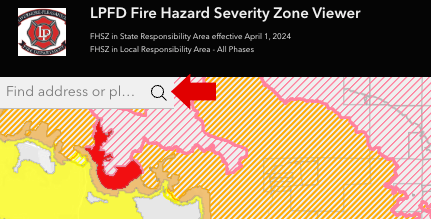
Fire Hazard Severity Zone
A Fire Hazard Severity Zone (FHSZ) map identifies areas with different levels of wildfire hazard potential. These zones are categorized as Moderate, High, or Very High based on factors like terrain, vegetation, fire history, and local weather, and they help communities understand and plan for wildfire risk.
Key aspects of FHSZ maps
- Scope: Recent legislation expanded the mapping to identify Moderate and High zones in addition to Very High zones, providing a more complete picture of fire hazard in State Responsibility Areas (SRA) and Local Responsibility Areas (LRA).
- Responsibility Area Is the geographic area identifying wildfire suppression responsibility. LRA’s fall under the local fire department within the city limits, while SRA’s typically cover county and state lands.
- Hazard maps measure “hazard,” which is the natural likelihood of fire based on long-term physical conditions, not “risk.”
- Risk measures mitigation efforts such as defensible space (vegetation management) and fire-resistant construction (home hardening).
- Classification factors: The zones are determined by considering factors such as:
- Fuel loading (vegetation)
- Slope (steepness of the land)
- Fire history
- Local weather and wind patterns
- Blowing embers
- Impact on property owners: Knowing a property’s FHSZ designation is important for:
- Building codes: New construction and renovations may have to comply with specific building codes in High and Very High zones.
- Defensible space: Homeowners in Very High zones are required to maintain defensible space around their homes.
- Real estate transactions: Sellers are required to disclose the FHSZ designation during the sale of a property.
How to find your zone
You can find your property’s
Fire Hazard Severity Zone by using our online map tool. Look up your property’s FHSZ using the property assessor’s parcel number or address.